Robotic Automation
Robotic MIG Welding
In MIG welding the robot moves the torch at the same angle and speed on every part; seam quality no longer depends on the operator and repeats on every part.
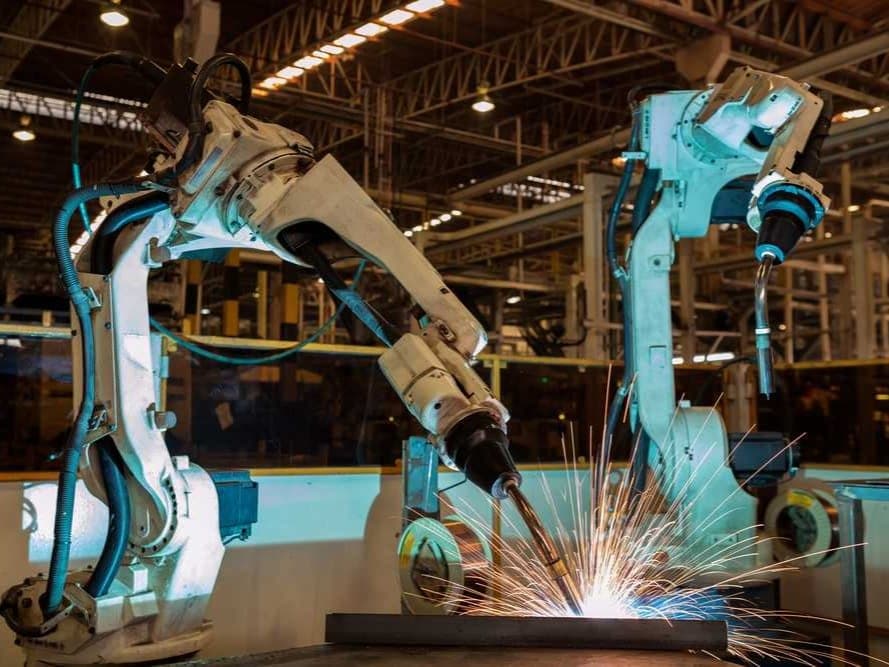
In MIG/MAG welding, seam quality depends on torch angle, travel speed and wire feed. In manual welding these vary with the operator's experience and fatigue; in robotic welding they stay the same on every part and quality is secured.
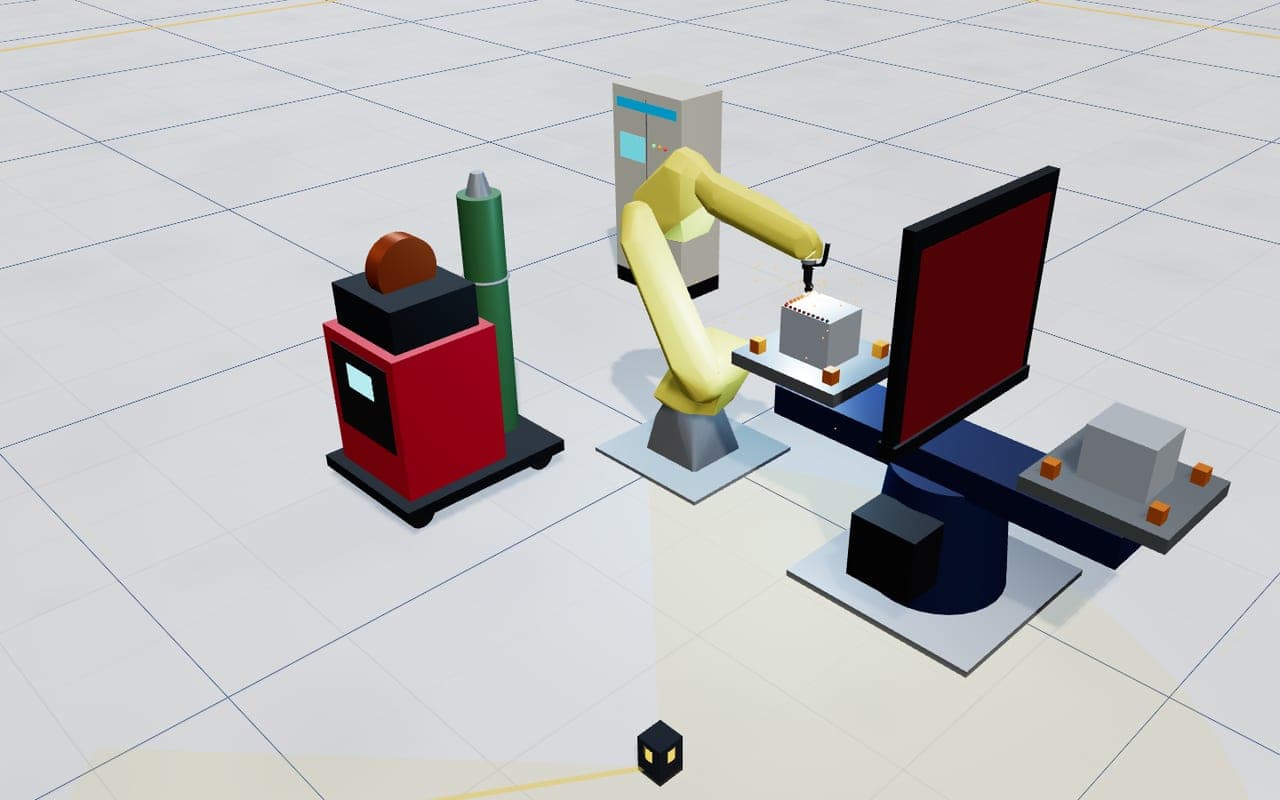
We design welding cells with two-station positioners: while the robot welds on one station the operator changes parts on the other, so the robot never waits. Deviations caused by part tolerances are corrected with camera-based seam tracking, and fume extraction and safety equipment are part of the cell design.
We design the cell, fixture and robot program around your part and verify cycle time and robot reach in simulation before installation.
Highlights
- Repeatable seam quality
- Two-station positioner
- Camera-based seam tracking
- Part-specific fixture
- Safe cell with fume extraction
Application areas
- Steel construction
- Automotive chassis parts
- Agricultural machinery
- Furniture metal parts