The challenge
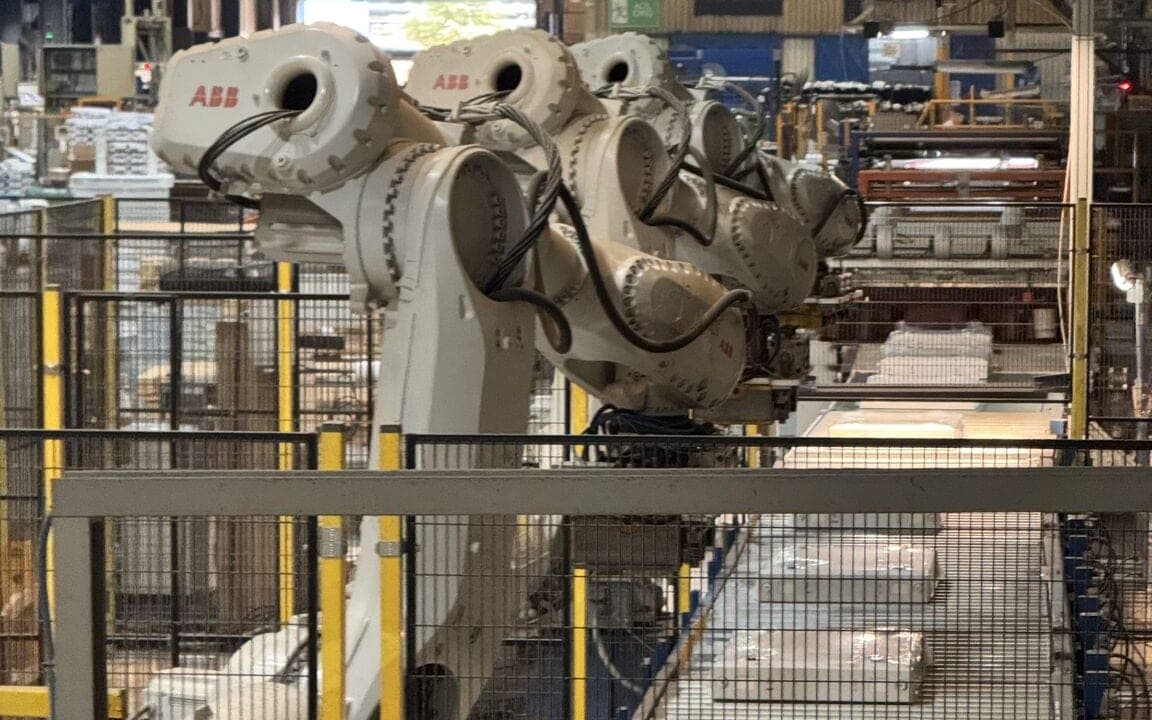
More than 100 types of glassware arriving in rows on the belt had to be recognized and picked by the robot in free-run mode, without a trigger sensor. Broken pieces had to be told apart from intact ones, and the line's own engineers had to be able to add new products easily as the range grows.
Our solution
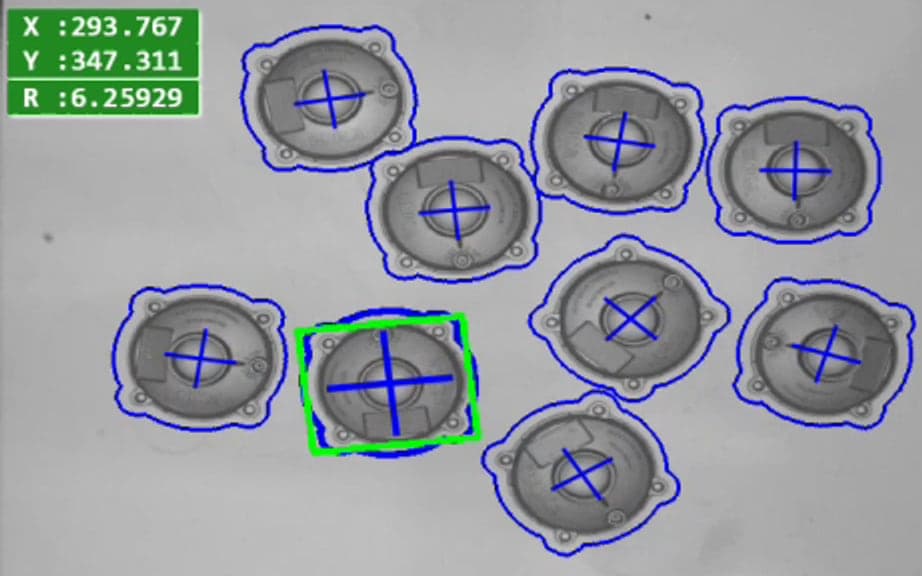
Our custom machine vision software detects every incoming row without sensors while the belt runs in free-run mode, and determines from the product recipe how many products the row contains. With conveyor tracking, the robot picks the moving row without stopping the belt.
Deep learning classifies every product as intact or broken. If the whole row is intact, the robot picks it in one go with the sponge piston tool; if the row contains broken pieces, the robot picks the products one by one with the vacuum tool.
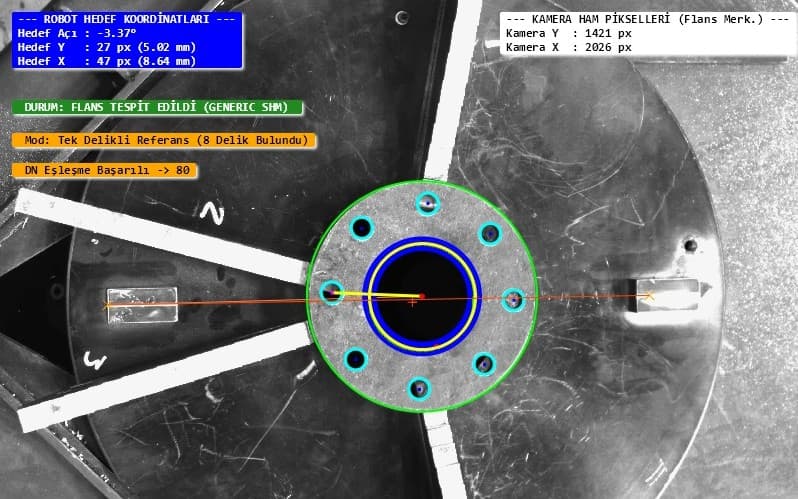
For the growing product range we developed a training program that lets the engineers responsible for the line add new products easily on their own. The system runs on an infrastructure of a product database, a thermal camera, PLC communication, and dataset collection and model training. The product being run, the decision threshold and intact/broken counts are shown on the operator screen.